
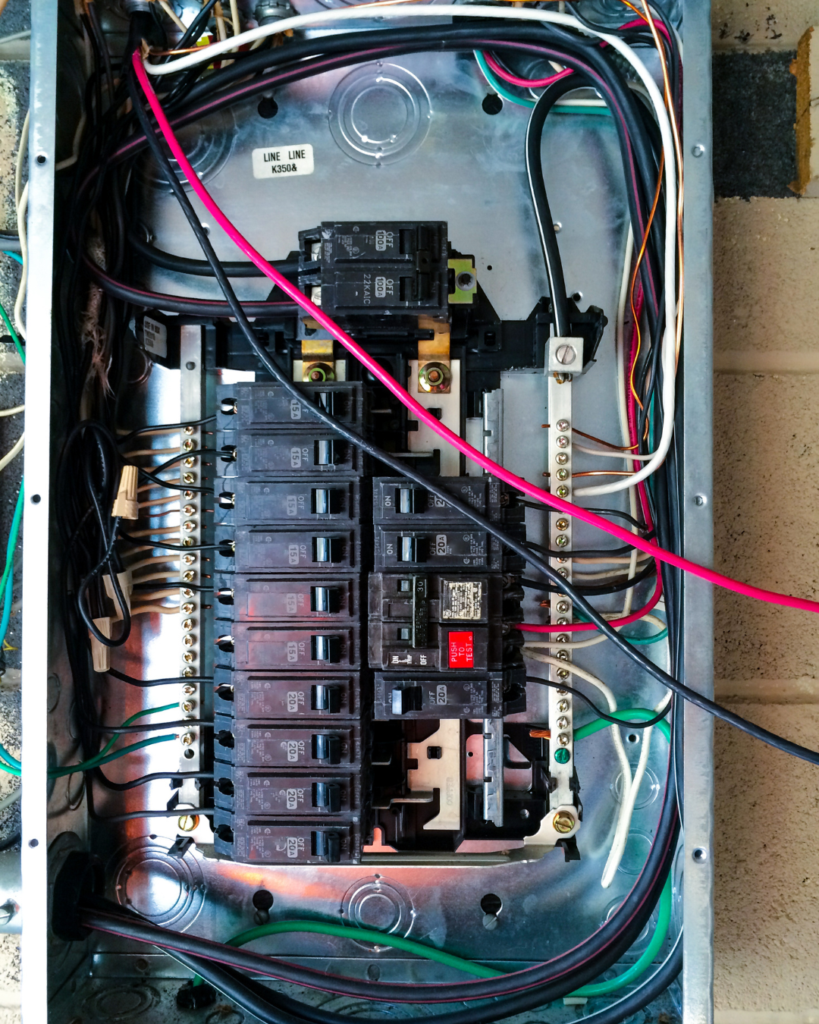
If you’ve ever been in the middle of cooking dinner or running the vacuum when the lights suddenly go out, you already know the frustration of a tripped circuit breaker. For many Thornton homeowners, this isn’t a one-time annoyance — it keeps happening. Understanding why can save you time, money, and potentially prevent a serious safety hazard.
What Is a Circuit Breaker Actually Doing?
Circuit breakers are your home’s first line of defense against electrical overloads and dangerous wiring faults. When a circuit draws more power than it can safely handle, the breaker “trips” and cuts the power to protect your home. It’s doing its job — but frequent tripping is a sign something needs attention.
The Most Common Reasons Breakers Trip in Thornton Homes
- Overloaded Circuits
This is the most frequent cause. Every circuit in your home is rated to handle a certain amount of electrical load, typically 15 or 20 amps. When you plug too many high-wattage devices into the same circuit — think space heaters, hair dryers, or window AC units — you exceed that limit and the breaker trips.
Thornton’s older established neighborhoods often have electrical panels that were designed for far less demand than today’s households require. A simple fix is to spread large appliances across different circuits, but if overloading is a recurring problem, your home may need a panel upgrade.
- Short Circuits
A short circuit is more serious. It happens when a hot wire comes into contact with a neutral wire, creating a sudden and dangerous surge of electricity. The breaker trips almost instantly as a safety response.
Warning signs include a burning smell near an outlet, scorch marks on a wall plate, or a buzzing sound when the breaker trips. If you notice any of these, stop resetting the breaker and call a licensed electrician right away. This is not a DIY situation.
- Ground Faults
Ground faults occur when electricity escapes its intended path, often through moisture or damaged wiring. They are especially common in kitchens, bathrooms, laundry rooms, and basements — anywhere water and electricity are in close proximity.
Modern homes use GFCI (Ground Fault Circuit Interrupter) outlets and breakers to catch these faults before they cause a shock or fire. If a breaker in one of these areas keeps tripping, check whether your GFCI outlet simply needs to be reset by pressing the small button on the face of the outlet.
- A Worn-Out Breaker
Breakers don’t last forever. Over time, especially in homes where the panel has seen heavy use or frequent trips, the internal components wear down and the breaker may start tripping under normal loads. If your breaker trips even when the circuit isn’t overloaded, the breaker itself may need to be replaced.
When Should You Call an Electrician?
Some tripped breakers can be resolved by unplugging a few devices or resetting a GFCI outlet. But you should contact a licensed electrician if:
- The breaker trips again immediately after being reset
- You notice burning smells, discoloration, or hear buzzing near your panel or outlets
- Multiple breakers are tripping at the same time
- Your home is older and has never had a panel inspection
- You are unsure of the cause
Continuously resetting a tripping breaker without finding the root cause is a fire hazard. When in doubt, leave it off and call a professional.
Frequently Asked Questions
Resetting a breaker once to see if it holds is generally fine. If it trips again right away, stop resetting it. Repeated tripping signals an underlying problem that needs professional diagnosis.
If the breaker trips only when multiple high-draw appliances are running at the same time, overloading is likely the cause. Try unplugging some devices and spreading them to other circuits.
A GFCI outlet has small “Test” and “Reset” buttons on its face. It monitors the flow of electricity and shuts off instantly if it detects a ground fault. They are required in wet areas of the home and can sometimes be reset without calling an electrician.
Yes. Older panels, or panels that are simply undersized for your home’s current demand, can cause chronic tripping. A licensed electrician can evaluate whether your panel needs to be upgraded.
Most breakers are designed to last 30 to 40 years, but frequent tripping, heat, and general age can shorten their lifespan. If your panel is older or a specific breaker trips regularly under normal use, it may be time for a replacement.
Let Positively Charged Handle It
Dealing with a circuit breaker that won’t stay reset? Don’t guess — get it checked by a professional. Positively Charged is your local electrician serving Thornton, CO and the surrounding communities. Whether you need a breaker replaced, a panel inspection, or a full electrical evaluation, our licensed team is ready to help.
Visit us at positivelychargedelectric.com/electrical-panels or give us a call to schedule your appointment today. We keep Thornton homes safe, one circuit at a time.